Model Kits
Kits of Figures, Vehicles, Artillery, Ships, Accessories, etc. by category.
Germany Panzerjagerwagen
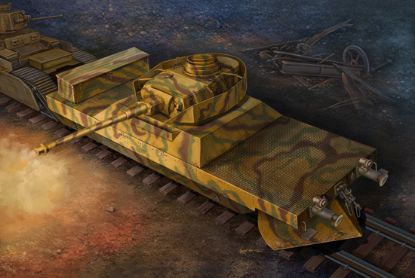
Trumpeter 00368
The vehicle was also called the Panzerwagen IV auf Zugwagen. To cut down any ambiguity, there was a "Panzerturm-IV auf Panzer Zugwagen" which was not only on rail, but existed as dug-in variant (panzerturm). The latter was conceived during the final battles of WW2. Generally tanks were previous items, but due to engine breakage, parts missing or just a tank being destroyed and unable to be repaired but with the hull mostly intact as the turret, it was tempting to have these buried impromptu "tank-busting" bunkers. Many were mismatch of parts typical of the "panzerturm" like an Ausf E hull with Ausf J turret. Some even received zimmerit. Panzerturm came in many places and types, but northern Italy was the most common ground for these. Low on the ground, they were a harder target to hit.
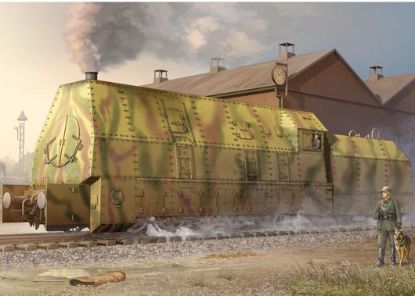
Germany Panzerlok BR57 Armoured Locomotive
Trumpeter 00219
The Panzerlok BR57 was a crucial part of the German military's armored train strategy during World War II. It was designed to provide protection for the locomotive and its cargo, making it an effective tool for the Wehrmacht.
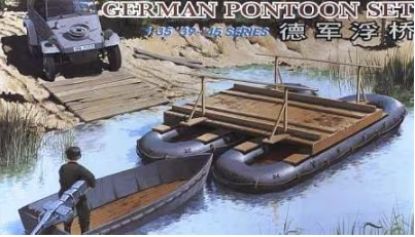
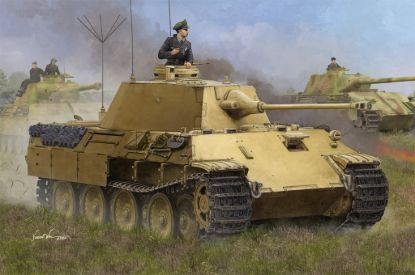
Germany Pz.BeobWg V Ausf.A
Hobby Boss 84534
The Pz.BeobWg V Ausf.A, also known as the Panther IV artillery observation tank, was developed as a successor to the Panther IV. It was based on the A-type hull and equipped with a swivel turret and a dummy barrel. By the end of the war, about 40 vehicles had been completed, and some were said to have been deployed in combat.
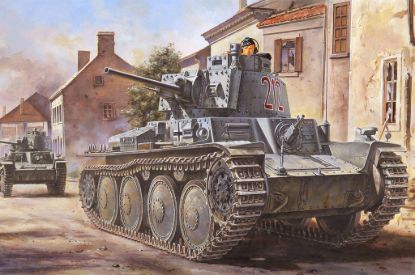
Germany Pz.Kpfw. / Pz.BfWg 38(t) Ausf. B
Hobby Boss 80138
The Panzerkampfwagen 38(t), originally known as the Českomoravská Kolben-Daněk (ČKD) LT vz. 38, was a tank designed during the 1930s, which saw extensive service during World War II. Developed in Czechoslovakia by ČKD, the type was adopted by Nazi Germany following the German occupation of Czechoslovakia. With the German Army and other Axis forces, the type saw service in the invasions of Poland, France and the USSR.
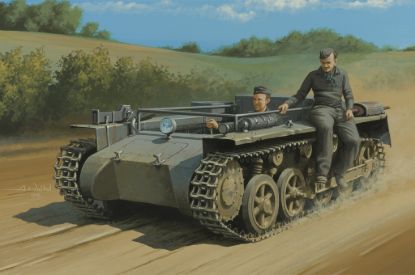
Germany Pz.Kpfw.1 Ausf. A ohne Aufbau
Hobby Boss 80144
The Sd.Kfz.111, also known as the gepanzerte Munitionsschlepper, was a military vehicle used by Nazi Germany during World War II. It was primarily based on the chassis of the Panzerkampfwagen I M.G. Sd. Kfz. 101 Ausf. A and was designed to transport ammunition. The vehicle was created by removing the turret and adding a simple open-topped box body. It was intended for units equipped with the 7.62 cm Pak 36 (r) ammunition. The Sd.Kfz.111 was converted from 50 vehicles, with additional contracts for conversion reported by DEW, leading to a total of 122 vehicles converted by the end of the war.
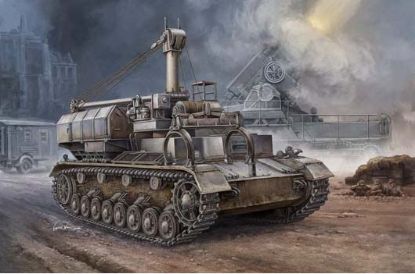
Germany PzKpfw IV Ausf D/E FAHRGESTELL
Trumpeter 00362
Munitionsschlepper IV Ausf. D, E and F chassis tanks modified to supply & load Karl-Gerät weapons with ammunition.
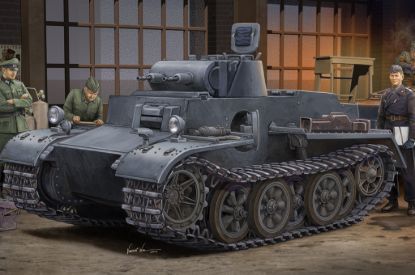
Germany Pzkpfw.I Ausf.F (VK1801)-Early
Hobby Boss 83804
The Panzer I Ausf. F, was as different from the Ausf. C as it was from the Ausf. A and B.[28] Intended as an infantry support tank, the Panzer I Ausf. F had a maximum armor thickness of 80 millimeters (3.15 in) and weighed between 18 and 21 tonnes.[29] The Ausf. F was armed with two 7.92 mm MG-34s.[30] Thirty were produced in 1940, and a second order of 100 was later canceled. In order to compensate for the increased weight, a new 150 horsepower (110 kW) Maybach HL45 Otto engine was used, allowing a maximum road speed of 25 kilometers per hour (15.5 mph) and used five overlapping road wheels per side, dropping the Ausf. C's interleaved units.
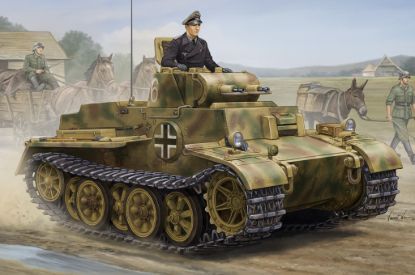
Germany Pzkpfw.I Ausf.F (VK1801)-Late
Hobby Boss 83805
The Panzer I Ausf. F, was as different from the Ausf. C as it was from the Ausf. A and B.[28] Intended as an infantry support tank, the Panzer I Ausf. F had a maximum armor thickness of 80 millimeters (3.15 in) and weighed between 18 and 21 tonnes.[29] The Ausf. F was armed with two 7.92 mm MG-34s.[30] Thirty were produced in 1940, and a second order of 100 was later canceled. In order to compensate for the increased weight, a new 150 horsepower (110 kW) Maybach HL45 Otto engine was used, allowing a maximum road speed of 25 kilometers per hour (15.5 mph) and used five overlapping road wheels per side, dropping the Ausf. C's interleaved units.
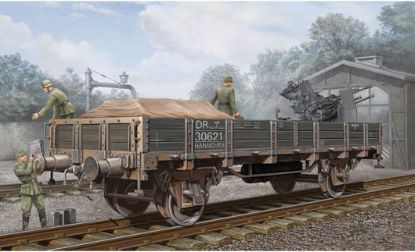
Germany Railway Gondola (Lower sides)
Trumpeter 01518
The military history of the German Railway Gondola is deeply intertwined with the Second World War, particularly during the German invasion of the Soviet Union.
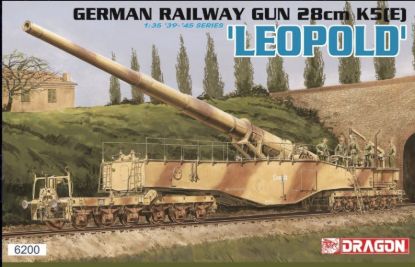
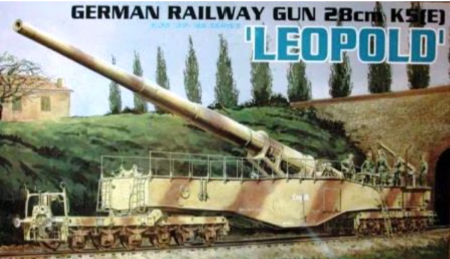
Germany Railway Gun 28cm K5(E) 'Leopold' with metal barrel and artillery crew figures
Dragon Models 6200
Germany RSO/3 w/5cm PaK 38 (SMART KIT)
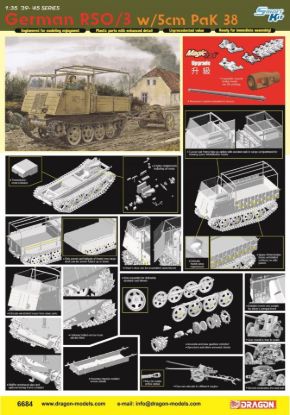
Dragon Models 6684
The Raupenschlepper Ost (RSO) was a fully tracked, lightweight vehicle developed by Germany during World War II. It was designed to address the mobility challenges faced by wheeled and half-tracked vehicles in the mud and snow of the Eastern Front. The RSO was a simple, robust, and lightweight tractor primarily used to tow light to medium artillery and for general transport of supplies and personnel. Its all-steel tracks and high ground clearance provided superior mobility in challenging terrain, making it an indispensable workhorse for German logistics in the East from 1942 until the end of the war.
Germany Sd.Kfz.179 Bergepanther Ausf.G
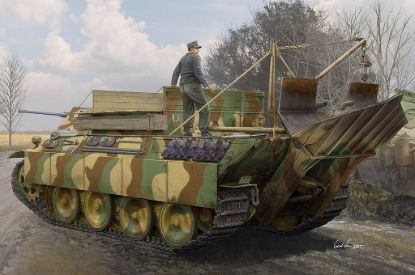
Hobby Boss 84553
The Bergepanzerwagen V (Sd.Kfz. 179), often referred to as the "Bergepanther", was an armoured recovery vehicle used by the German Army in WWII. It was a variant of the Panzerkampfwagen V Panther (Sd.Kfz. 171).
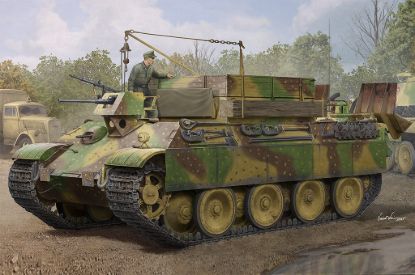
Germany Sd.Kfz.179 Bergepanther Ausf.G Late version
Hobby Boss 84554
The Bergepanzerwagen V (Sd.Kfz. 179), often referred to as the "Bergepanther", was an armoured recovery vehicle used by the German Army in WWII. It was a variant of the Panzerkampfwagen V Panther (Sd.Kfz. 171).
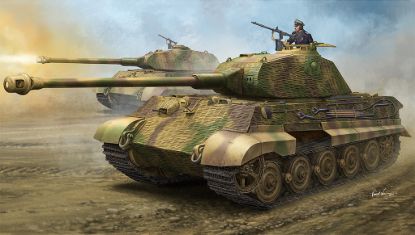
Germany Sd.Kfz.182 King Tiger Porsche turret w/zimmerit
Hobby Boss 84530
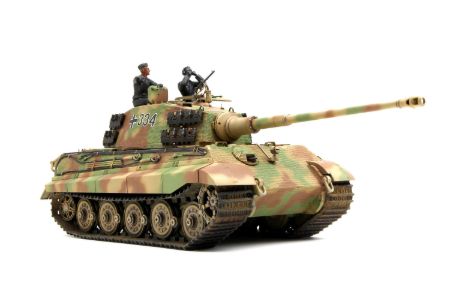
The Tiger II was the successor to the Tiger I, combining the latter's thick armour with the armour sloping used on the Panther medium tank. Contemporaneous Allied soldiers often called it the King Tiger or Royal Tiger. It was the costliest German tank to produce at the time. The tank weighed almost 70 tonnes and was protected by 100 to 185 mm (3.9 to 7.3 in) of armour to the front. It was armed with the long barrelled (71 calibres) 8.8 cm KwK 43 anti-tank cannon. The chassis was also the basis for the Jagdtiger turretless Jagdpanzer anti-tank vehicle.