
Model Kits
Kits of Figures, Vehicles, Artillery, Ships, Accessories, etc. by category.
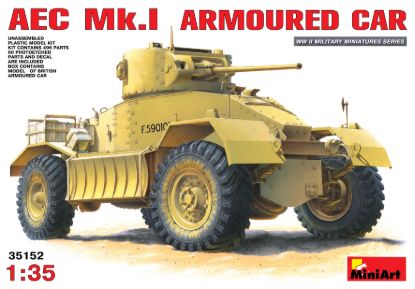
AEC Mk 1 Armoured Car
MiniArt 35152
The Mk I was first used in combat in the North African Campaign late in 1942, where a few vehicles were reportedly fitted with a Crusader tank turret mounting a 6-pounder gun. The Mk II and Mk III took part in the fighting in Europe with British and British Indian Army units, often together with the American-supplied Staghound armoured car. The AEC armoured car with 75 mm gun replaced US half-track 75 mm self-propelled guns in the four fighting squadrons of some armoured car regiments. The vehicle remained in service after the end of the war until replaced by the Alvis Saladin. The Lebanese Army used the car at least until 1976. From 1956 some AEC turrets were added to Lebanese Staghound armoured cars.
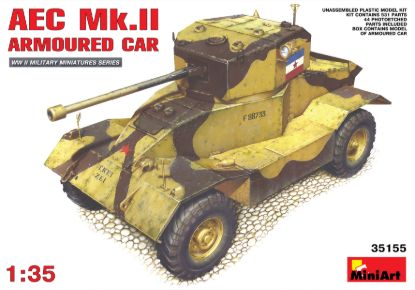
AEC Mk 2 Armoured Car
MiniArt 35155
The Mk I was first used in combat in the North African Campaign late in 1942, where a few vehicles were reportedly fitted with a Crusader tank turret mounting a 6-pounder gun. The Mk II and Mk III took part in the fighting in Europe with British and British Indian Army units, often together with the American-supplied Staghound armoured car. The AEC armoured car with 75 mm gun replaced US half-track 75 mm self-propelled guns in the four fighting squadrons of some armoured car regiments. The vehicle remained in service after the end of the war until replaced by the Alvis Saladin. The Lebanese Army used the car at least until 1976. From 1956 some AEC turrets were added to Lebanese Staghound armoured cars.
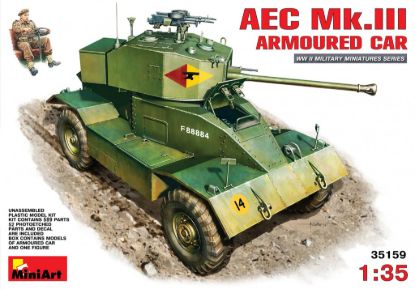
AEC Mk 3 Armoured Car
MiniArt 35159
The Mk I was first used in combat in the North African Campaign late in 1942, where a few vehicles were reportedly fitted with a Crusader tank turret mounting a 6-pounder gun. The Mk II and Mk III took part in the fighting in Europe with British and British Indian Army units, often together with the American-supplied Staghound armoured car. The AEC armoured car with 75 mm gun replaced US half-track 75 mm self-propelled guns in the four fighting squadrons of some armoured car regiments. The vehicle remained in service after the end of the war until replaced by the Alvis Saladin. The Lebanese Army used the car at least until 1976. From 1956 some AEC turrets were added to Lebanese Staghound armoured cars.
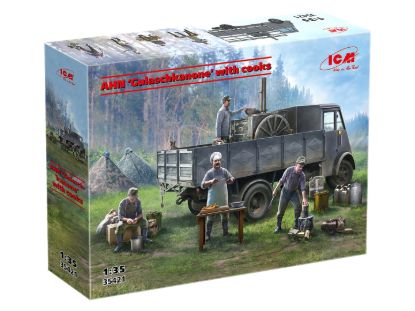
AHN 'Gulaschkanone' with cooks
ICM 35421
The AHN 'Gulaschkanone' was a significant part of the Wehrmacht's military history, playing a crucial role in sustaining the army's strength and morale during World War II. The field kitchens were essential for providing soldiers with hot meals, and their design and functionality were adapted to the needs of the German army. The Gulaschkanone, with its chimney resembling a cannon barrel, was a symbol of the average German soldier's life at the front. The kitchens were used in various forms, including horse-drawn and motorized, and were equipped with different cauldrons and storage compartments. The AHN 'Gulaschkanone' was a testament to the German army's commitment to providing food and comfort to its soldiers, even in the most austere conditions.
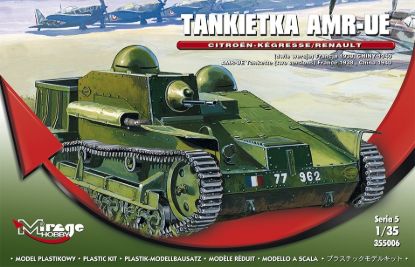
AMR -UE TANKETTE CITROEN-KEGRESSE/RENAULT
Mirage 355006
The Renault UE(f) Munitionsschlepper played a crucial role in the military operations of both France and Germany during World War II, showcasing the versatility and adaptability of military vehicles in the face of changing battlefield conditions.
![Picture of Armored Casemate [Concrete Bunker for a single machine gun – type 3]](https://afvhobbydevapp.azurewebsites.net/images/thumbs/0023200_armored-casemate-concrete-bunker-for-a-single-machine-gun-type-3_415.jpeg "Show details for Armored Casemate [Concrete Bunker for a single machine gun – type 3]")
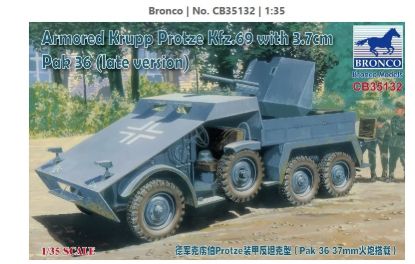
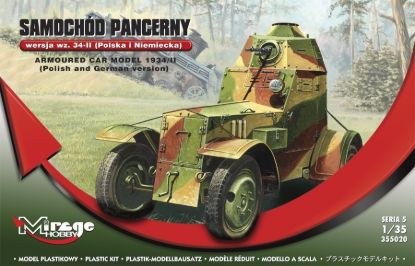
ARMOURED CAR MODEL 1934/II (POLISH and Germany version)
Mirage 355020
Samochód pancerny wz. 34 ("armored car, year 1934 model"), was a standard light armored car used by the Polish Army during the September Campaign of 1939.
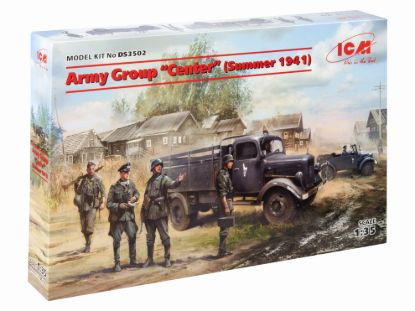
Army Group Center (Summer 1941) (Kfz.1, Typ L3000S, Germany Infantry (4 figures), Germany Drivers (4 figures))
ICM DS3502
The set includes 4 kits of the German Army; the Einheits-Pkw kit #35581 ( Kfz.1), Mercedes-Benz L3000S truck kit #35420, along with German Infantry 1939-1942 kit #35639 (4 figures), German Drivers 1939-1945 kit #35642 (4 figures)
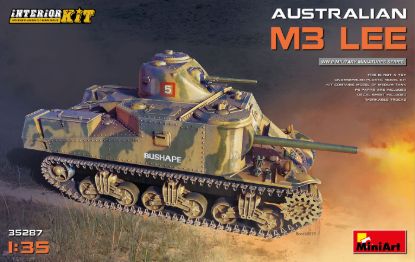
Australian M3 Lee. Interior Kit
MiniArt 35287
The M3 Lee, officially Medium Tank, M3, was an American medium tank used during World War II. The turret was produced in two different forms, one for US needs and one modified to British requirements to place the radio next to the commander. In British Commonwealth service, the tank was called by two names: tanks employing US-pattern turrets were called "Lee", named after Confederate general Robert E. Lee, while those with British-pattern turrets were known as "Grant", named after Union general Ulysses S. Grant.